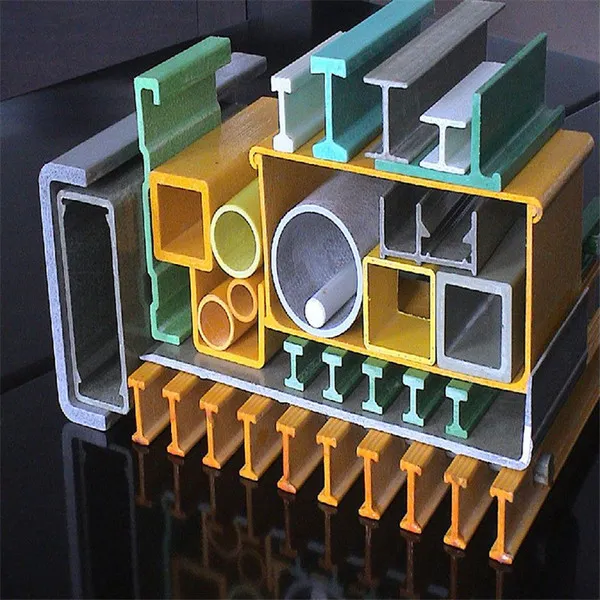
What Are FRP Profiles?
FRP profiles — fiber-reinforced polymer structural shapes — are engineered composite materials manufactured through the pultrusion process, combining continuous glass fiber reinforcements with thermosetting resin matrices. The result: structural members that deliver the strength of steel at one-quarter the weight, with inherent corrosion resistance that eliminates maintenance for decades.
At its core, an FRP profile is a constant cross-section composite shape where unidirectional glass fiber rovings provide longitudinal tensile strength (up to 400 MPa) while multidirectional continuous strand mat delivers transverse and shear properties. The fiber reinforcement typically makes up 60-70% by weight of the finished profile, with the resin system — polyester, vinyl ester, or epoxy — binding the fibers and transferring load between them.
Material Composition
What distinguishes FRP profiles from other structural materials is their performance profile. A standard E-glass/polyester FRP I-beam weighs approximately 1.85-2.0 g/cm³ — about 75% less than structural steel (7.85 g/cm³) and 30% less than aluminum (2.7 g/cm³). Yet its longitudinal tensile strength reaches 207-400 MPa, competitive with structural steel grades. This exceptional strength-to-weight ratio, combined with zero corrosion, makes FRP profiles the preferred structural material for environments where metal fails prematurely.
How Are FRP Profiles Manufactured?
The pultrusion process is the dominant manufacturing method for FRP structural profiles — a continuous, automated process that produces consistent, high-quality sections at competitive cost. Understanding this process is essential for engineers evaluating whether FRP can meet their structural requirements.
-
Step 1: Fiber Reinforcement & Resin Impregnation
Continuous E-glass fiber rovings are pulled from creels under controlled tension and guided through a resin bath containing thermosetting resin (polyester, vinyl ester, or epoxy), catalysts, UV stabilizers, pigments, and flame retardants. Fibers are fully saturated to achieve 60-70% fiber content by weight — the optimal ratio for high-strength structural profiles.
-
Step 2: Pre-forming & Heated Die Curing (120-180°C)
Saturated fiber bundles pass through pre-form guides that gradually shape the material, then enter a precision-machined steel die heated to 120-180°C. The thermosetting resin undergoes irreversible chemical cross-linking. Continuous strand mat layers on the surface create a resin-rich protective veil that prevents fiber bloom and enhances corrosion resistance. Dimensional tolerance: ±0.5 mm.
-
Step 3: Pulling, Cooling & Cutting to Length
Caterpillar-type pullers draw the cured profile at 0.3-2.0 m/min. Standard cut lengths: 6 m or 12 m (20 or 40 ft). Custom lengths up to 18 m available. Every meter has identical mechanical properties — critical for predictable structural design.
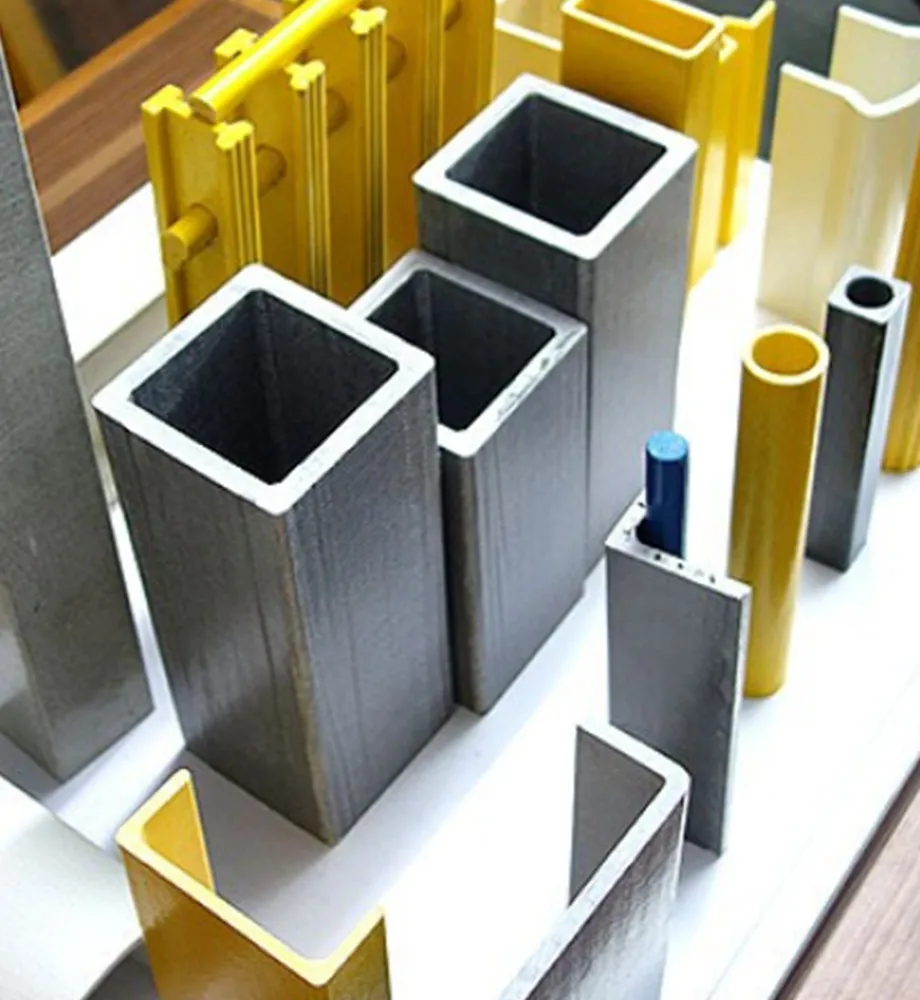
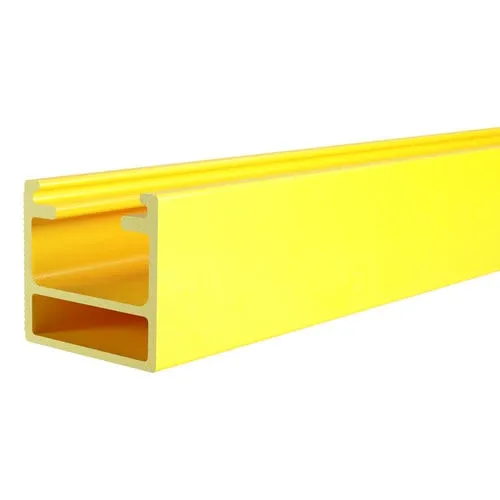
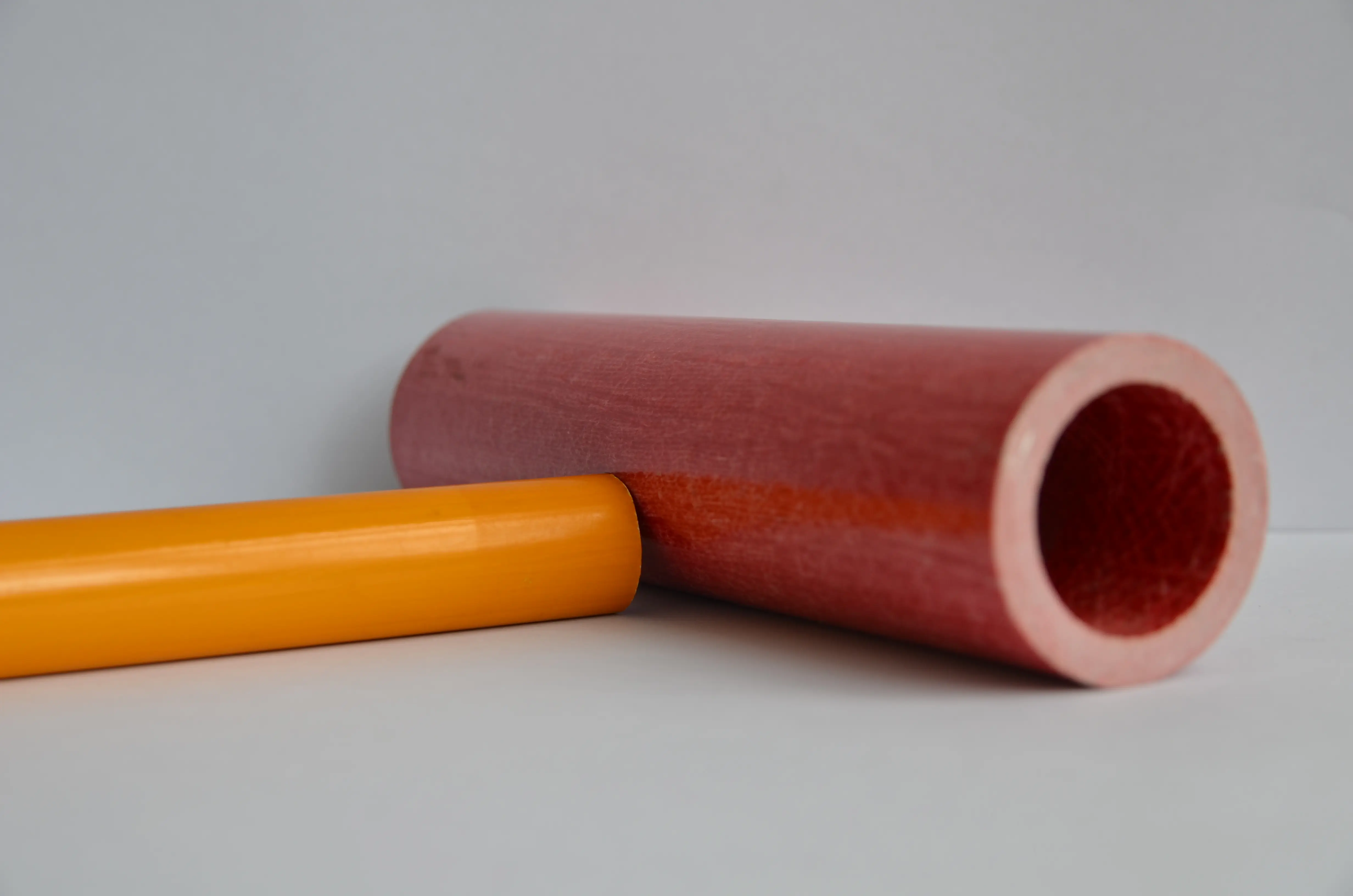
Precision pultruded FRP profile with consistent cross-section and smooth surface finish
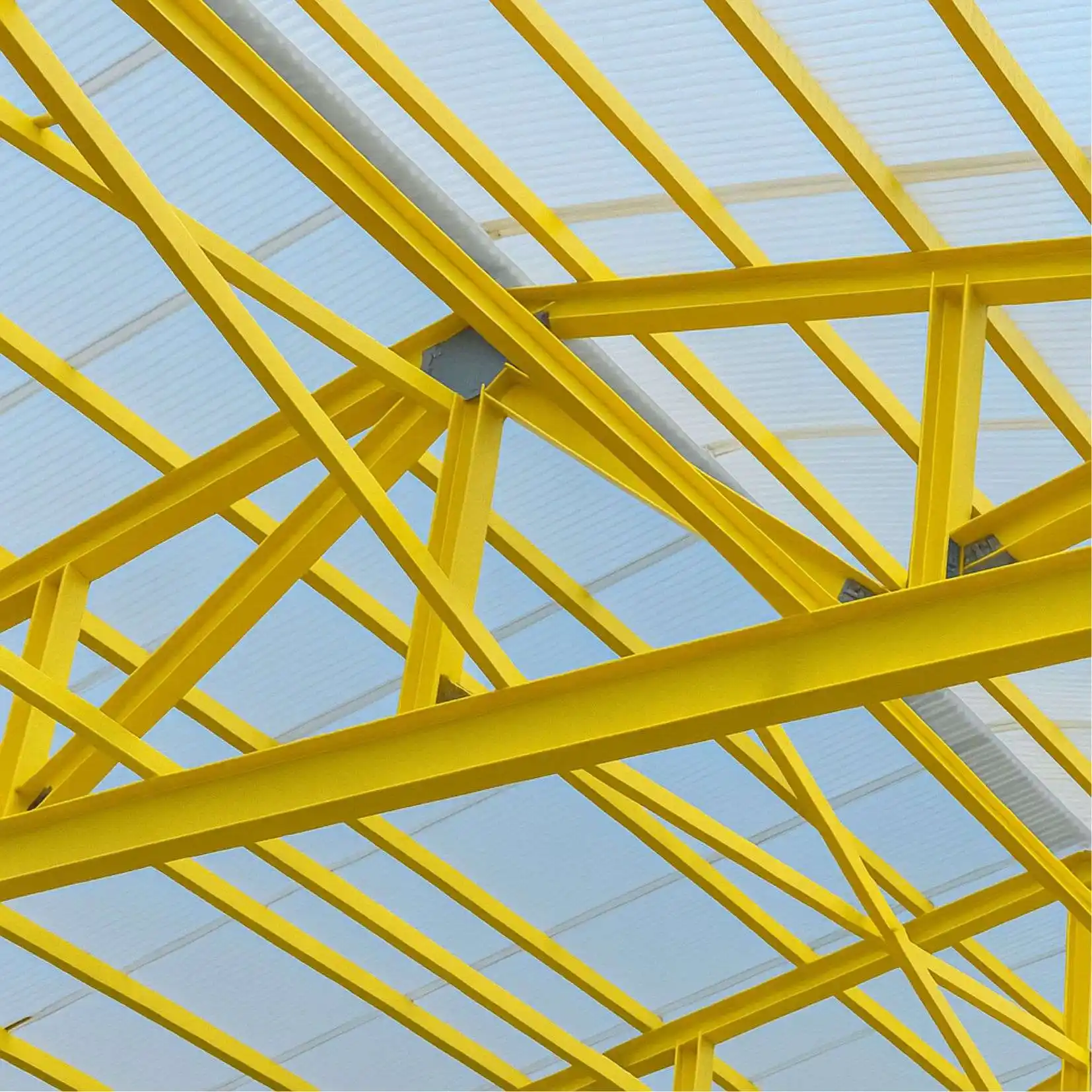
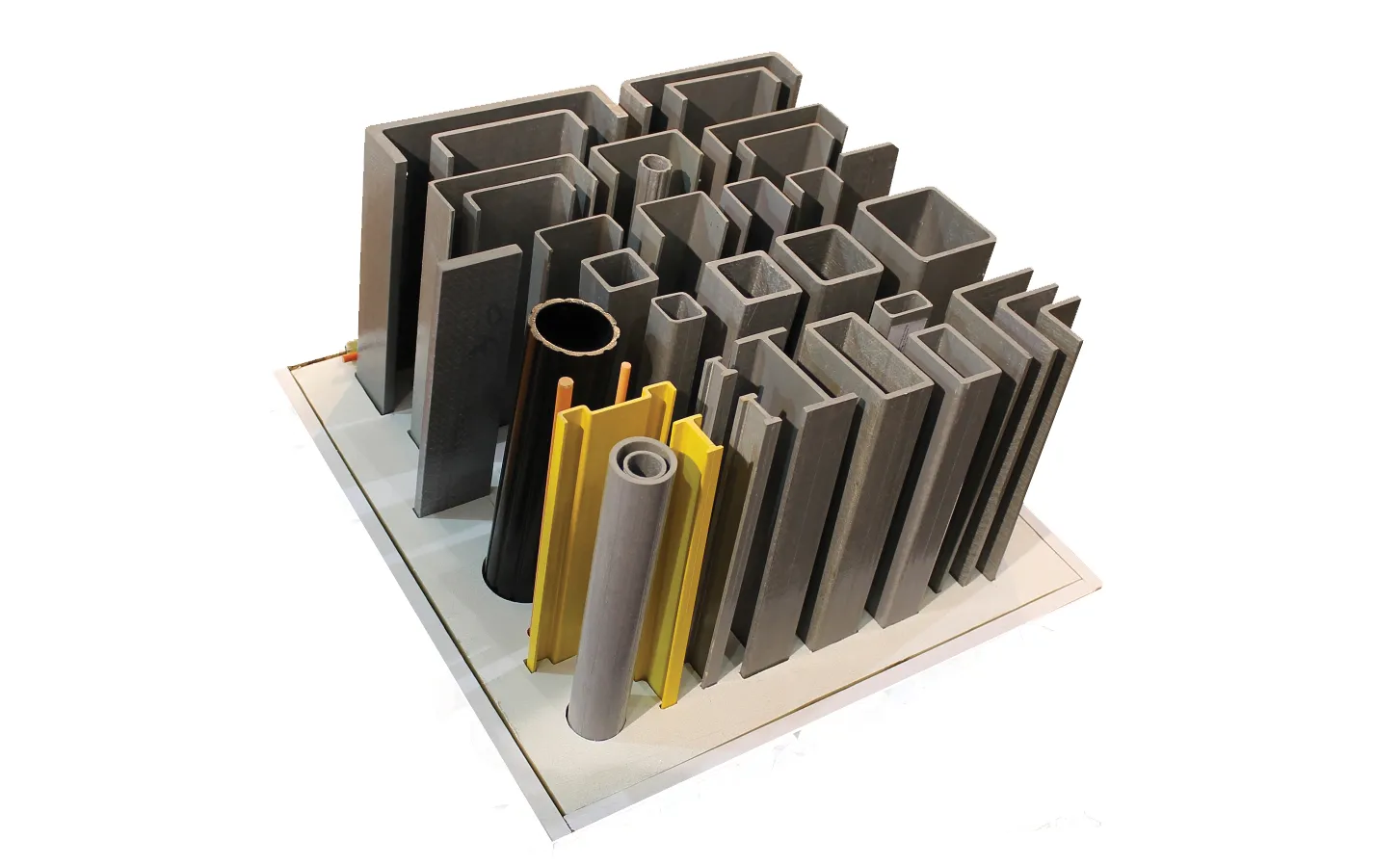
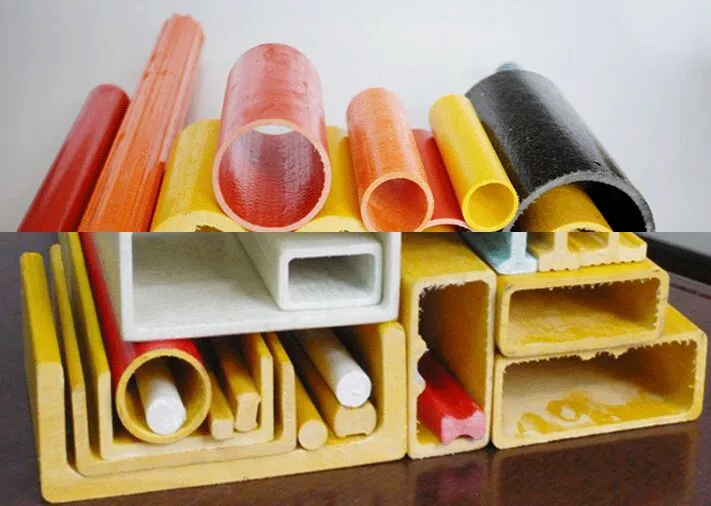
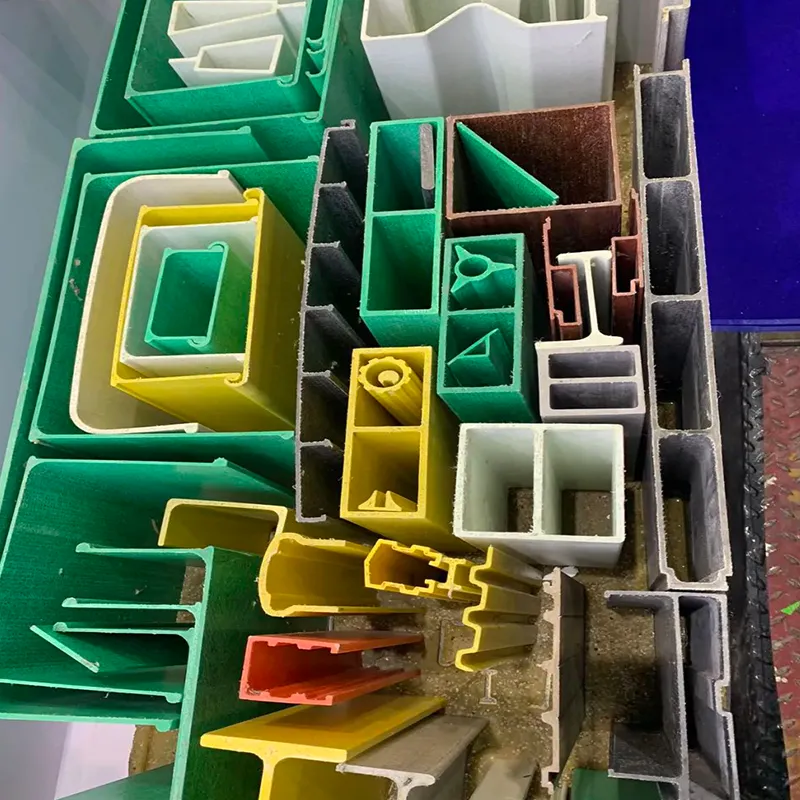
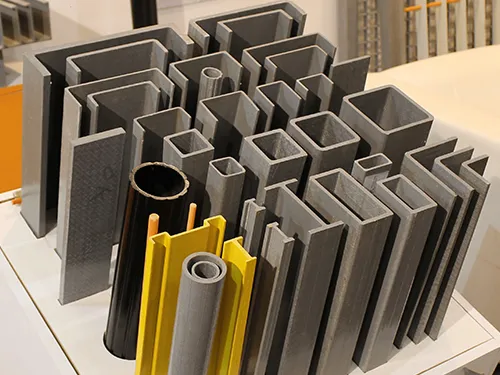
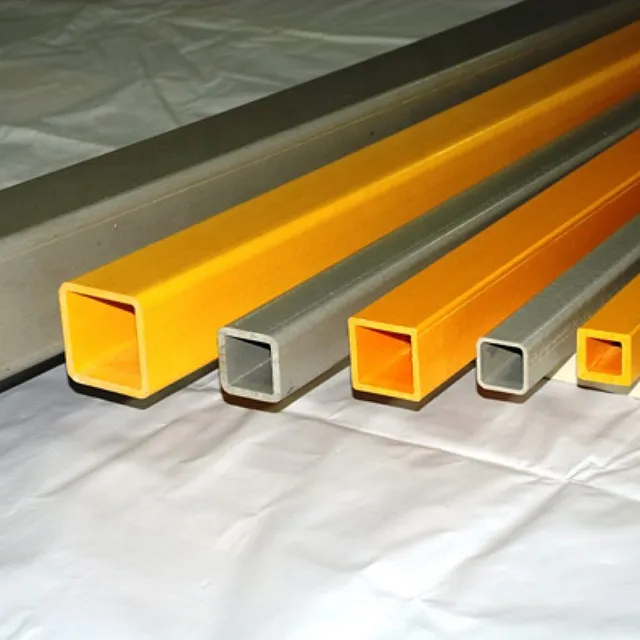
Multiple FRP profile cross-sections — I-beam, channel, angle, square tube, round tube
Types of FRP Profiles
FRP profiles are pultruded in a comprehensive range of structural shapes that mirror traditional steel sections. Each profile type serves distinct structural functions. Select the right shape for your load-bearing requirements below.
FRP I-Beam & Wide Flange Beam
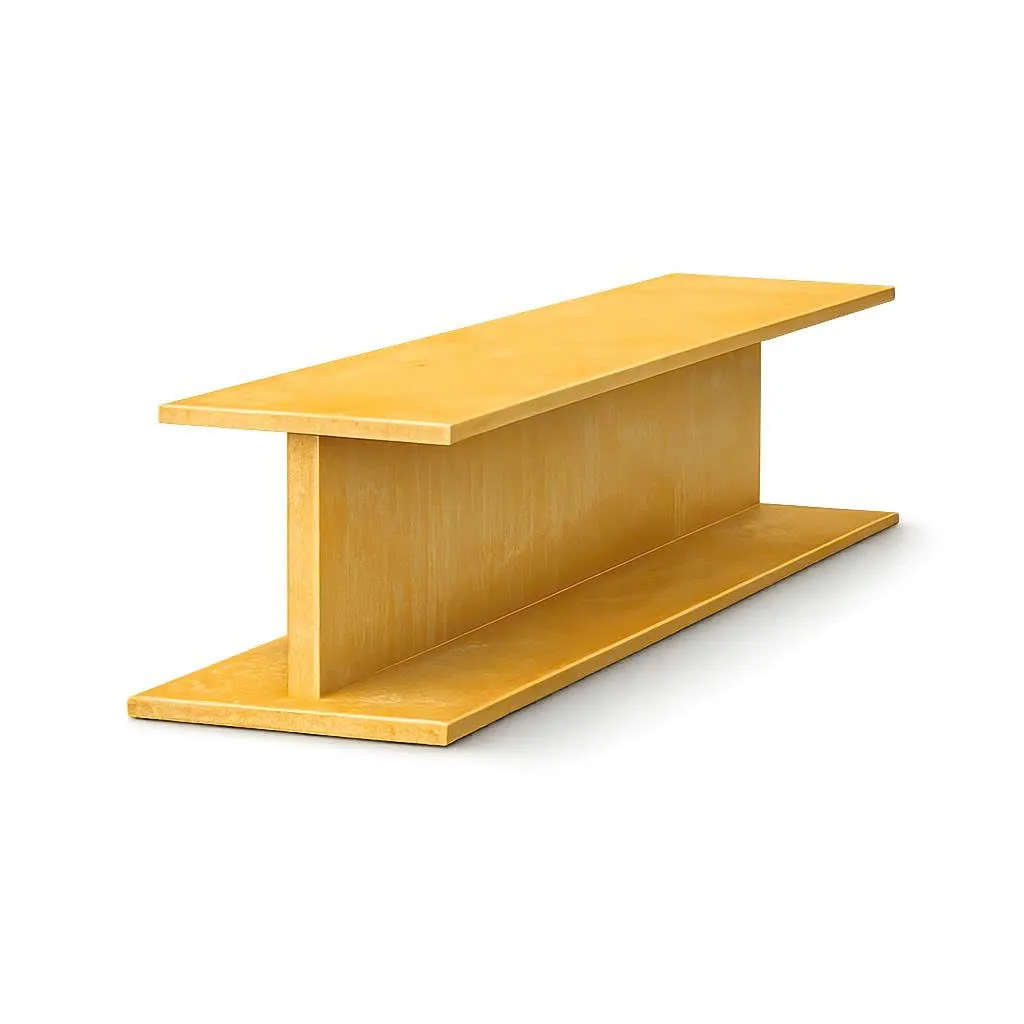
Maximum bending stiffness per unit weight. Parallel top/bottom flanges with vertical web. WF beams offer enhanced lateral stability for columns.
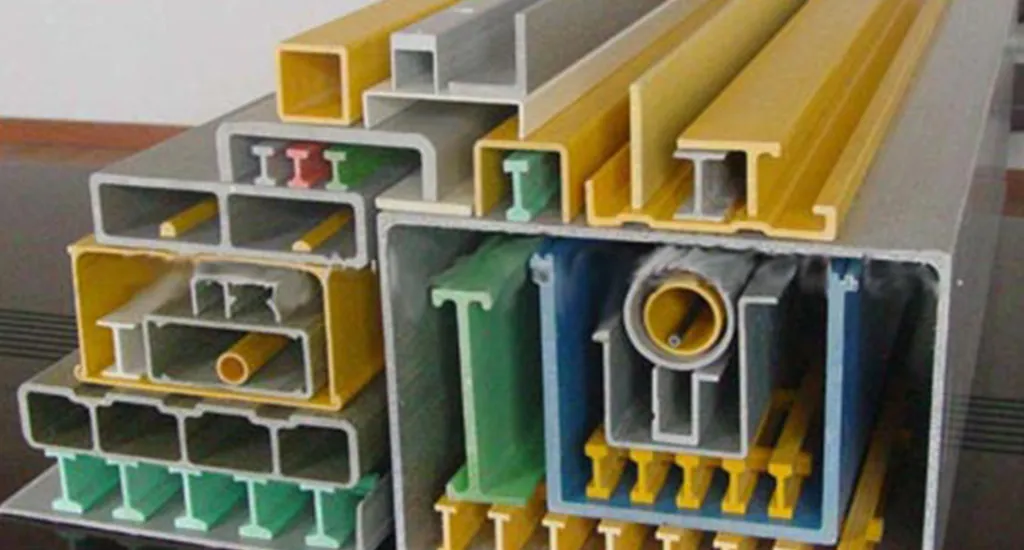
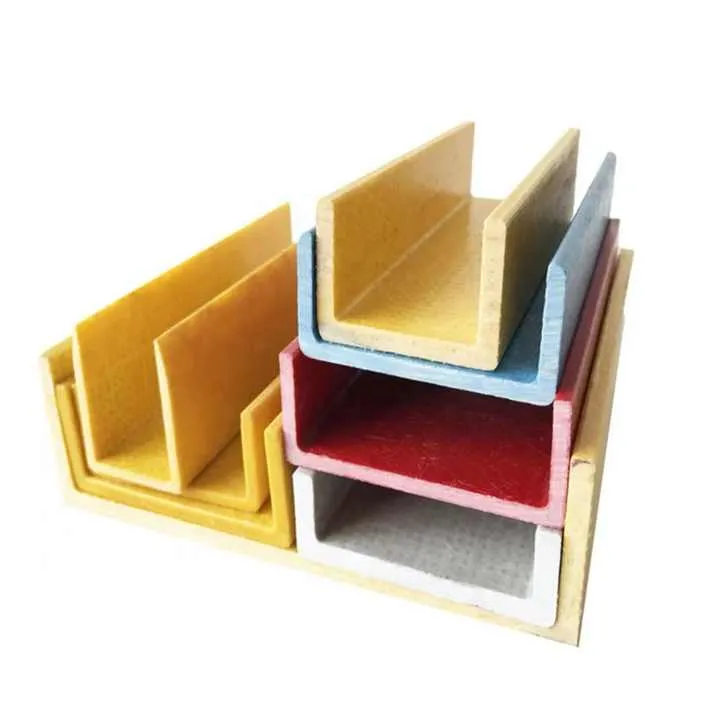
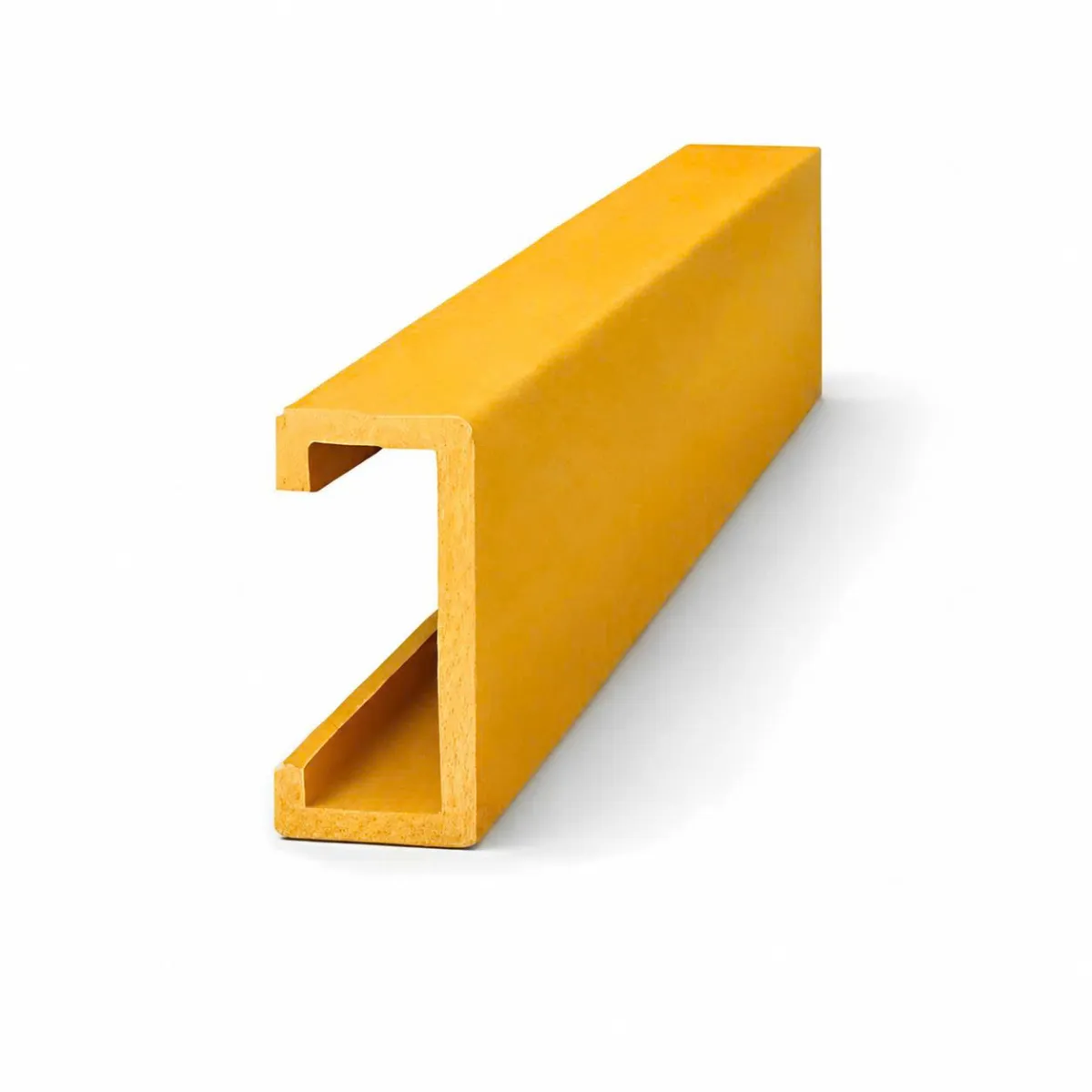
FRP Channel (C & U Section)
C-shaped profiles for single-plane bending. Edge beams, stiffeners, equipment support frames. Equal and unequal-leg options.
FRP Angle (L-Shape)
Most versatile profile. Equal/unequal-leg angles for connections, bracing, corner guards, ladder rails, and stiffeners.
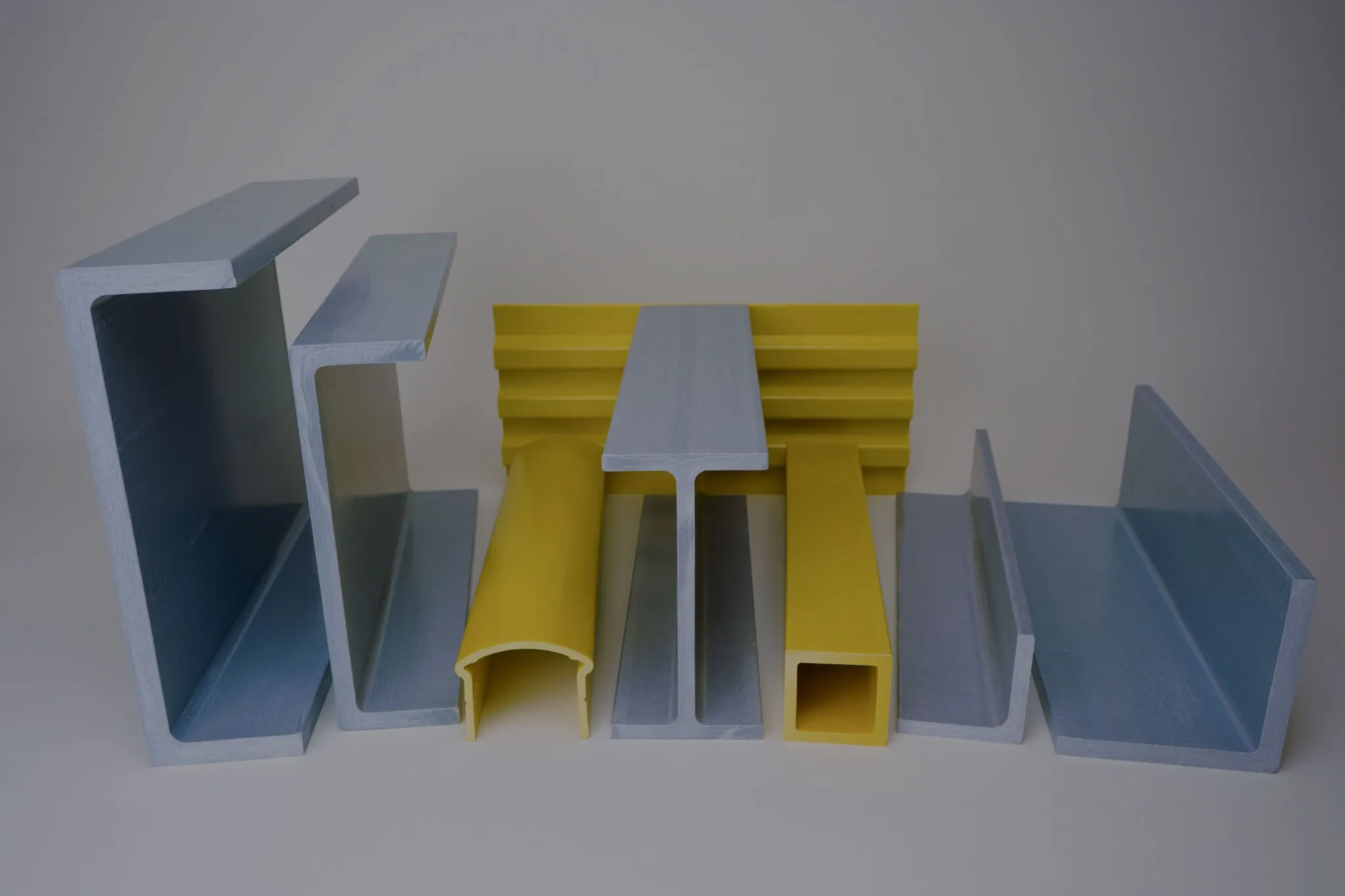
FRP Square & Round Tube
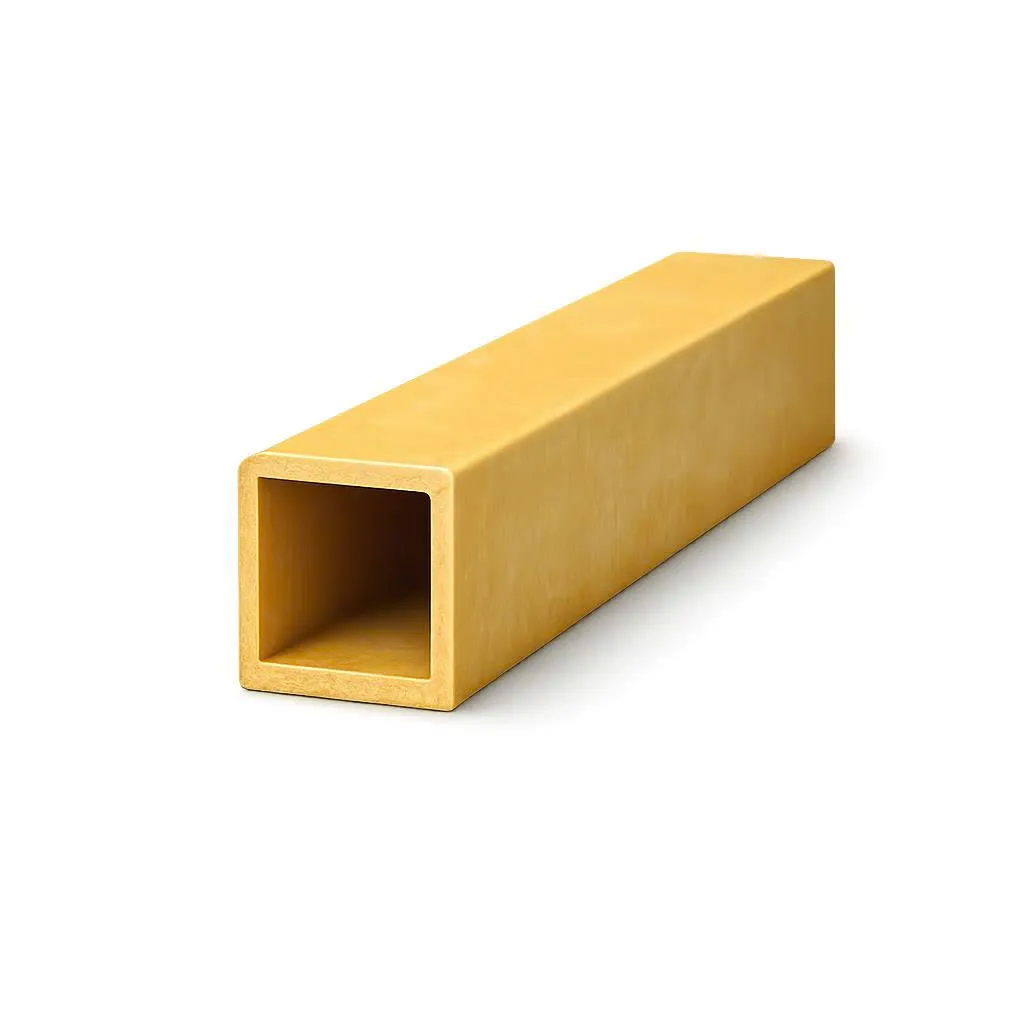
Hollow sections for torsional resistance. Square tubes: handrail posts, columns. Round tubes: rollers, utility poles, antenna masts.
FRP Flat Bar
Rectangular solid profiles for bearing surfaces, stiffeners, mounting plates, and reinforcement strips.
FRP Solid Rod & T-Profile
Solid rods for tensile and insulation applications. T-profiles for specialized single-flange framing.
Custom FRP Profiles
Beyond standard shapes, FRP Shape's in-house tooling department produces custom pultrusion dies for virtually any constant cross-section geometry. Multi-cavity profiles consolidate multiple metal parts into a single composite section — reducing assembly steps, fasteners, and failure points.
FRP Profiles vs Steel vs Aluminum
When evaluating FRP profiles against traditional structural metals, the decision cannot be reduced to a single metric. Below: 12 critical engineering dimensions compared side-by-side.
| Property | FRP (E-Glass/Polyester) | Steel (A36) | Aluminum (6061-T6) | FRP Advantage |
|---|---|---|---|---|
| Density | 1.6-2.0 g/cm³ | 7.85 g/cm³ | 2.7 g/cm³ | 4× lighter |
| Tensile Strength | 207-400 MPa | 250-400 MPa | 310 MPa | Comparable |
| Tensile Modulus | 20-45 GPa | 200 GPa | 69 GPa | Lower stiffness |
| Flexural Strength | 240-600 MPa | 250 MPa (yield) | 276 MPa | Superior |
| Compressive Strength | 150-440 MPa | 250 MPa (yield) | 240 MPa | Comparable |
| Corrosion Resistance | Excellent | Poor | Limited | Zero maintenance |
| Electrical | Non-conductive | Conductive | Conductive | Safe for electrical |
| Thermal Conductivity | 0.3-0.5 W/m·K | 50 W/m·K | 200 W/m·K | 1/100 of Al |
| Thermal Expansion | 8-10 ×10⁻⁶ /K | 11-13 ×10⁻⁶ /K | 23 ×10⁻⁶ /K | Lowest |
| Fatigue Life | Excellent | Good | Moderate | Best |
| Max Service Temp | 120°C (polyester) | 400°C | 200°C | Limited |
| 30-year Lifecycle Cost | Lowest | Highest | Medium | Best in corrosive |
Multi-Dimensional Performance Score
Strength-to-Weight Ratio
Corrosion Resistance
30-Year Maintenance Cost
FRP Profile Specifications & Standard Sizes
FRP Shape manufactures pultruded profiles to ASTM D3917 dimensional tolerance standards and EN 13706 mechanical property requirements. Three resin system options for different service environments.
| Grade | Resin | Color | Fire Rating | Best For |
|---|---|---|---|---|
| Standard | Isophthalic Polyester | Olive Green | Class 2 | General structural, indoor/outdoor |
| FR/UV | Fire-Retardant Polyester | Dark Gray / Yellow | Class 1 | Building code, occupied structures |
| VE | Vinyl Ester | Beige / Yellow | Class 1 | Chemical plants, marine, severe corrosion |
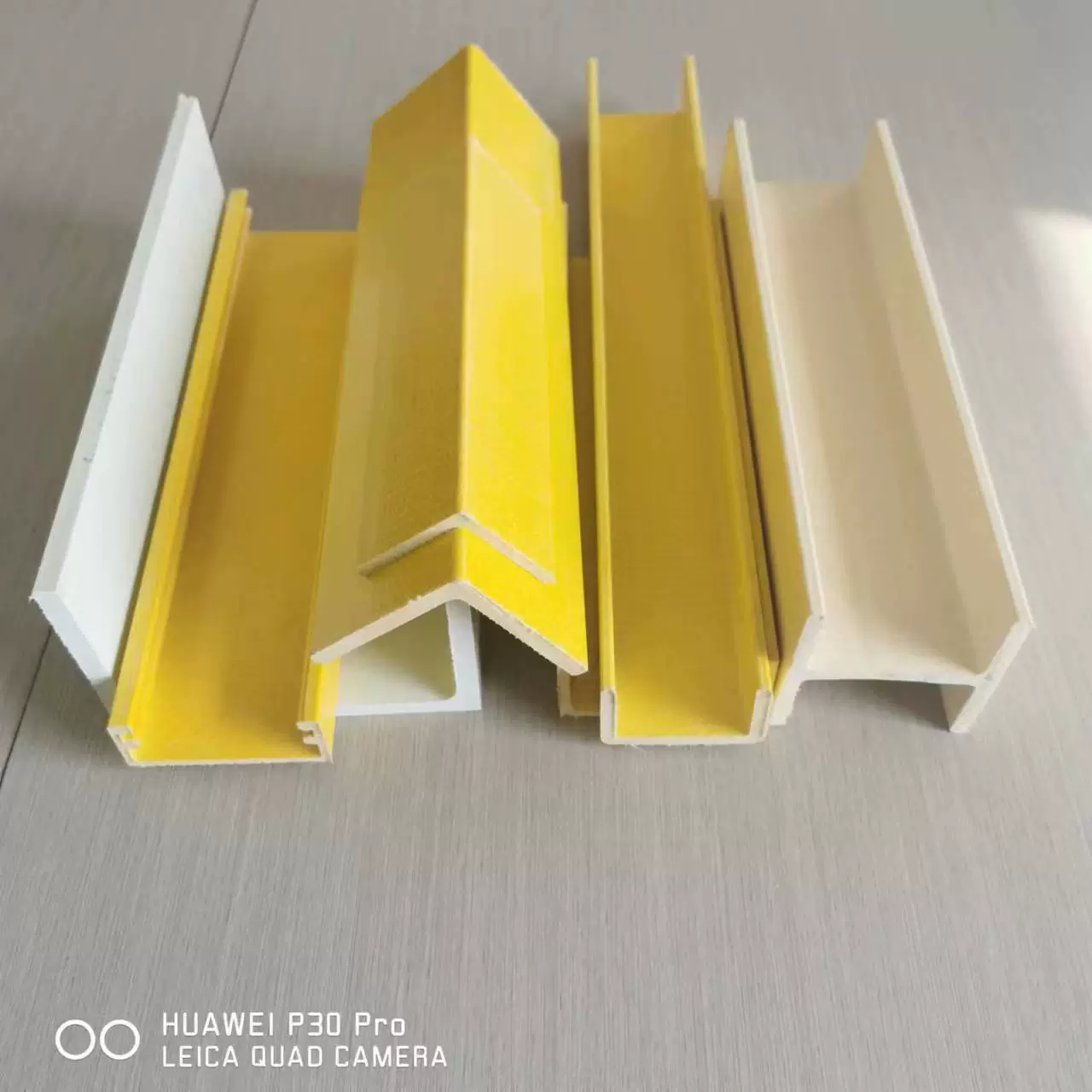
Stock FRP profiles available in three resin grades for different environmental requirements
Standard Size Range by Profile Type
| Profile Type | Size Range | Wall/Web | Length |
|---|---|---|---|
| I-Beam | 100×50 to 600×200 mm | 6-18 mm | 6m / 12m |
| Channel | 50×25 to 300×90 mm | 3-12 mm | 6m / 12m |
| Angle (Equal Leg) | 25×25×3 to 150×150×12 mm | 3-12 mm | 6m / 12m |
| Square Tube | 25×25 to 200×200 mm | 3-12 mm | 6m / 12m |
| Round Tube | OD 20-300 mm | 2-12 mm | 6m / 12m |
| Flat Bar | 25-300 × 3-50 mm | N/A (solid) | 6m / 12m |
| Solid Rod | OD 6-80 mm | N/A (solid) | 6m / 12m |
| Custom | Up to 1,350×600 mm | 2.5-40 mm | Up to 18m |
Custom Manufacturing: In-house tooling department. Custom dies: 4-8 weeks lead time, tooling cost $2,000-15,000. Minimum production: 500-1,000 linear meters per order. Contact our engineering team with your cross-section drawing for a feasibility assessment. For detailed dimensions, see our fiberglass structural shapes sizing chart.
Mechanical Properties & Load Data
Structural design with FRP profiles requires understanding anisotropic (direction-dependent) material properties. Data below represents baseline mechanical properties for E-glass/polyester pultruded profiles, verified per ASTM and ISO standards.
| Property | Standard | Longitudinal | Transverse | Unit |
|---|---|---|---|---|
| Tensile Strength | ASTM D638 / ISO 527 | 207-400 | 48-55 | MPa |
| Tensile Modulus | ASTM D638 / ISO 527 | 20-35 | 8-12 | GPa |
| Flexural Strength | ASTM D790 / ISO 14125 | 240-600 | 80-100 | MPa |
| Flexural Modulus | ASTM D790 / ISO 14125 | 15-27 | 7-10 | GPa |
| Compressive Strength | ASTM D695 / ISO 14126 | 150-440 | 80-110 | MPa |
| Interlaminar Shear | ASTM D2344 / ISO 14130 | 25-35 | — | MPa |
| Barcol Hardness | ASTM D2583 | 45-55 | — | — |
| Water Absorption | ASTM D570 | <0.5% | — | 24hr |
| CTE | ASTM D696 | 8-10 | 20-25 | ×10⁻⁶/K |
| Tg (Glass Transition) | ASTM D3418 | 120-150 | — | °C |
| Fiber Content | ASTM D2584 | 60-70 | — | % wt |
| Density | ASTM D792 | 1.6-2.0 | — | g/cm³ |
Design Safety Factors
per ASCE Pre-Standard for Pultruded FRP
FRP Profile Applications by Industry
Chemical Processing
Platforms, walkways, tank supports, pipe racks. Vinyl ester resin systems resist acids, alkalis, and solvents. Zero maintenance for 25+ years.
Water & Wastewater Treatment
Clarifier walkways, filter bed supports, chemical feed platforms. Eliminates continuous repainting in chlorinated environments.
Electrical & Power Utilities
Substation structures, transformer platforms, cable trays. Non-conductive — eliminates grounding concerns and EMI interference.
Marine & Offshore
Docks, piers, offshore grating, handrails. Saltwater immune, no cathodic protection needed. Survives where steel rusts in months.
Infrastructure & Bridge
Pedestrian bridges, guardrails, retaining walls. Lightweight reduces foundation loads. De-icing salt immunity beats steel-reinforced concrete.
Renewable Energy
Solar panel mounting frames, wind blade roots, hydropower supports. 25-year outdoor durability with zero structural degradation.
Food Processing & Pharmaceutical
FRP profiles are non-porous, easily cleanable, and resistant to sanitizing chemicals. Used for cleanroom structural supports, washdown-area platforms, and sanitary processing frames. Meet FDA and cGMP requirements for food-contact and pharmaceutical environments.
Design & Selection Guide for Engineers
Selecting the right FRP profile requires evaluating multiple factors beyond simple load calculations. These principles are based on 25+ years of FRP structural engineering and align with ASCE, ACI 440, and Eurocomp design recommendations.
Select Profile Type
I-beams/WF beams: primary bending members. Channels: edge beams, equipment supports. Angles: bracing, connections, stiffeners. Tubes: columns, torsional members. Flat bars: bearing surfaces.
Choose Resin System
Polyester: general use (80°C max). FR Polyester: fire-rated, occupied structures. Vinyl Ester: chemical plants, marine (100°C). Epoxy: aerospace, high-temp (150°C). Phenolic: mining, tunnels, mass transit.
Check Deflection
δmax = (5wL⁴) / (384EI)
E = longitudinal flexural modulus (15-27 GPa). I = moment of inertia of profile cross-section. Verify L/180 (industrial) to L/360 (occupied) limits.
Bolt Connection Design
Edge distance: ≥2× bolt diameter. Spacing: ≥4× diameter. Use 316L stainless or FRP bolts — never carbon steel. Washers under head AND nut. Torque: 20-40 N·m max. Carbide-tipped drill bits at 1,500-3,000 RPM.
FRP Profile Pricing & RFQ Process
FRP profile pricing depends on five primary factors:
- 1 Profile Type & Dimensions: Larger cross-sections need more material. I-beams with deep webs (>300 mm) cost more than standard angles of similar weight.
- 2 Resin System: Standard polyester = most economical. Vinyl ester adds ~25-40% material cost. Epoxy and phenolic carry additional premiums.
- 3 Order Quantity: Standard profiles benefit from production efficiency at higher volumes. Custom profiles amortize tooling across the order quantity.
- 4 Surface Finish & Additives: Custom colors, UV-stabilized, fire-retardant, specialty veils (carbon fiber, aramid) affect final pricing.
- 5 Logistics & Packaging: 6 m lengths ship in standard containers. 12-18 m lengths may require specialized freight.
Total Installed Cost Advantage
Includes lighter foundations (75% weight reduction), faster installation (no welding), and zero lifecycle maintenance (no painting, no coating renewal). In corrosive, marine, and chemical environments, FRP delivers the lowest 30-year total cost.
Frequently Asked Questions
FRP profiles serve as structural members — beams, columns, bracing, and framing — in environments where steel would corrode. Primary applications: chemical plant platforms, water treatment facility walkways, electrical substation structures, marine docks and piers, pedestrian bridges, solar panel mounting frames, and industrial equipment supports. Anywhere corrosion, weight, or electrical conductivity drives material selection.
Standard pultruded types: I-beams, wide flange beams, C-channels, U-channels, equal-leg and unequal-leg angles, square tubes, round tubes, rectangular hollow sections, flat bars, solid rods, T-profiles, and custom geometries. Manufactured in sizes ranging from 25×25 mm angles to 600×200 mm I-beams, with custom profiles up to 1,350 mm wide × 600 mm high.
FRP weighs 75% less than steel and 30% less than aluminum with comparable tensile strength (207-400 MPa). Advantages: inherent corrosion resistance (no coatings), electrical non-conductivity, low thermal conductivity (1/100 of aluminum). Limitation: lower elastic modulus (20-35 GPa vs 200 GPa for steel) — deflection governs design, requiring deeper sections for equivalent stiffness. FRP delivers lowest 30-year lifecycle cost in corrosive environments.
FRP profile pricing varies significantly by profile type, dimensions, resin system, and order quantity. Standard polyester angle sections are the most economical; large vinyl ester I-beams with thick sections represent the upper range. For accurate project-specific pricing, submit your specifications and quantity requirements for a factory-direct quote — pricing is always based on current raw material costs and production scheduling.
I-beams: 100×50 mm to 600×200 mm. Channels: 50×25 mm to 300×90 mm. Angles: 25×25×3 mm to 150×150×12 mm. Square tubes: 25×25 mm to 200×200 mm. Round tubes: OD 20-300 mm. Flat bars: 25-300 mm wide × 3-50 mm thick. Standard lengths: 6 m and 12 m. All manufactured to ASTM D3917 tolerances. Custom sizes and lengths up to 18 m available on request.
Yes — FRP profiles are extensively used outdoors. UV-stabilized resin formulations prevent surface degradation and color fading. For maximum UV resistance in tropical or high-altitude installations, specify FR/UV or VE resin grades with enhanced UV stabilizer packages. Surface chalking over decades is cosmetic only — no structural degradation.
Absolutely. FRP Shape maintains an in-house tooling department for custom pultrusion dies. Any constant cross-section geometry up to 1,350 mm wide × 600 mm high can be manufactured. Typical custom die development: 4-8 weeks. Minimum production: 500-1,000 linear meters. Provide your cross-section drawing and service requirements for a tooling quote.
Carbide-tipped circular saw blades (60-80 tooth) at 3,000-5,000 RPM for clean cuts. Carbide-tipped or diamond-coated drill bits at 1,500-3,000 RPM — avoid HSS bits which dull rapidly. Always wear PPE (respirator, glasses, gloves). Water-mist cooling extends tool life and suppresses dust. Never use cutting fluids that may contaminate the resin surface.
Designed for 25-50 year service life with zero maintenance. FRP does not rust, pit, or require recoating. Primary aging: gradual resin degradation from sustained UV and elevated temperature — cosmetic before structural. In chemical environments, service life depends on specific chemical, concentration, and temperature. FRP structures installed in the 1980s remain in service today in chemical plants and marine environments.
Standard polyester: Class 2 flame spread (ASTM E84, index 26-75). For Class 1 (index ≤25), specify FR/UV (fire-retardant polyester) or VE (vinyl ester) grades. For the most stringent fire/smoke requirements (mining, tunneling, mass transit), phenolic resin systems achieve flame spread below 25 with very low smoke. Fire-rated FRP profiles meet ASTM E84, UL 94, DIN 4102, and EN 45545-2 standards.
Ready to Specify FRP Profiles for Your Project?
FRP Shape has delivered 8,500+ FRP structural projects across 35+ countries over 25+ years. Our engineering team provides complimentary technical review of your structural drawings, profile selection guidance, and factory-direct pricing. ISO 9001:2015 certified manufacturing — every profile backed by ASTM D3917 compliance.
Email: sales@dtladder.com | WhatsApp: +8615511879488