Introduction
When designing structural support systems for solar panel installations, engineers and procurement specialists face a critical material decision: FRP (Fiberglass Reinforced Plastic) versus aluminum. The FRP vs aluminum solar mounting structure debate has intensified as solar energy projects seek longer-lasting, corrosion-resistant, and cost-effective mounting solutions. Both materials bring distinct advantages to structural applications, but the right choice depends on environmental conditions, load requirements, budget constraints, and project lifespan expectations.
This comprehensive comparison examines how FRP and aluminum stack up across key performance metrics including weight, strength, corrosion resistance, cost, and longevity. Whether you are evaluating FRP/GRP structure mounting – ideal for mounting solar panels for a coastal solar farm or comparing aluminum handrails for an industrial platform, understanding these material properties will guide you toward the optimal structural decision.
What Are FRP and Aluminum?
Before diving into the comparison, it is essential to understand what each material brings to structural applications. While both FRP and aluminum serve as lightweight alternatives to traditional steel, their chemical composition, manufacturing processes, and physical properties differ significantly — influencing how they perform in solar mounting and other structural roles.
Understanding FRP (Fiberglass) Composites
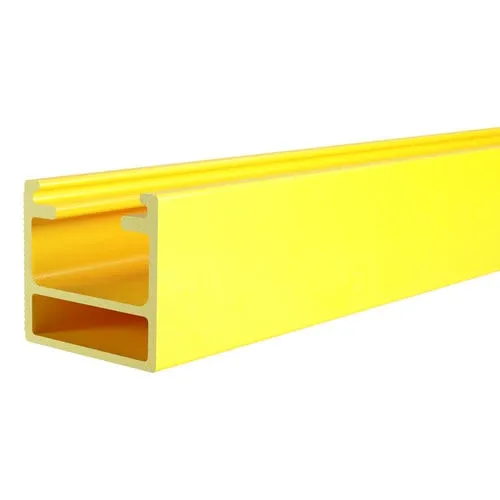
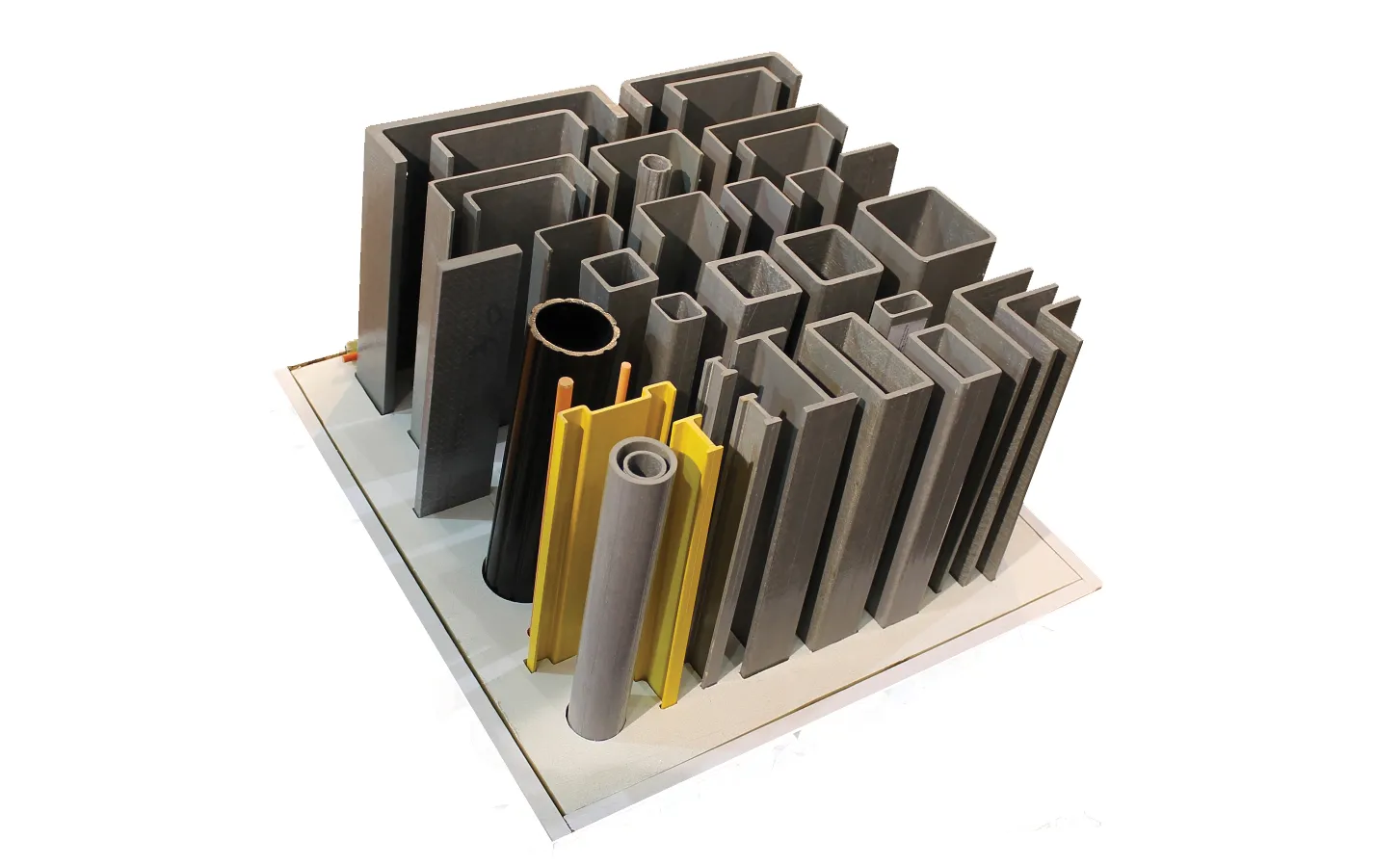
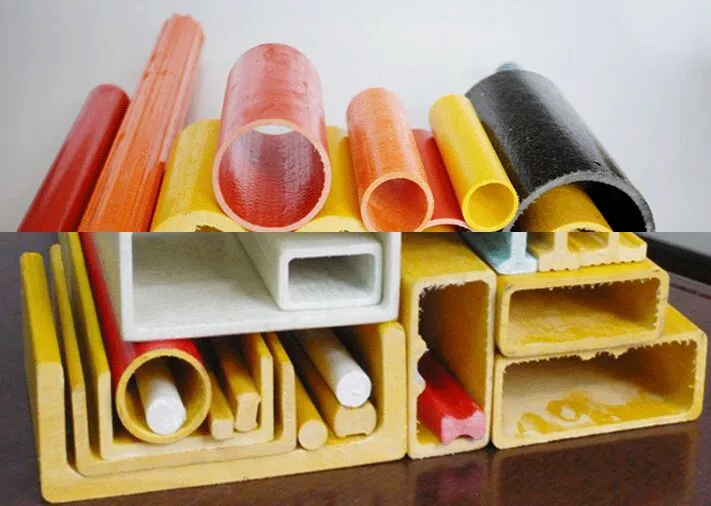
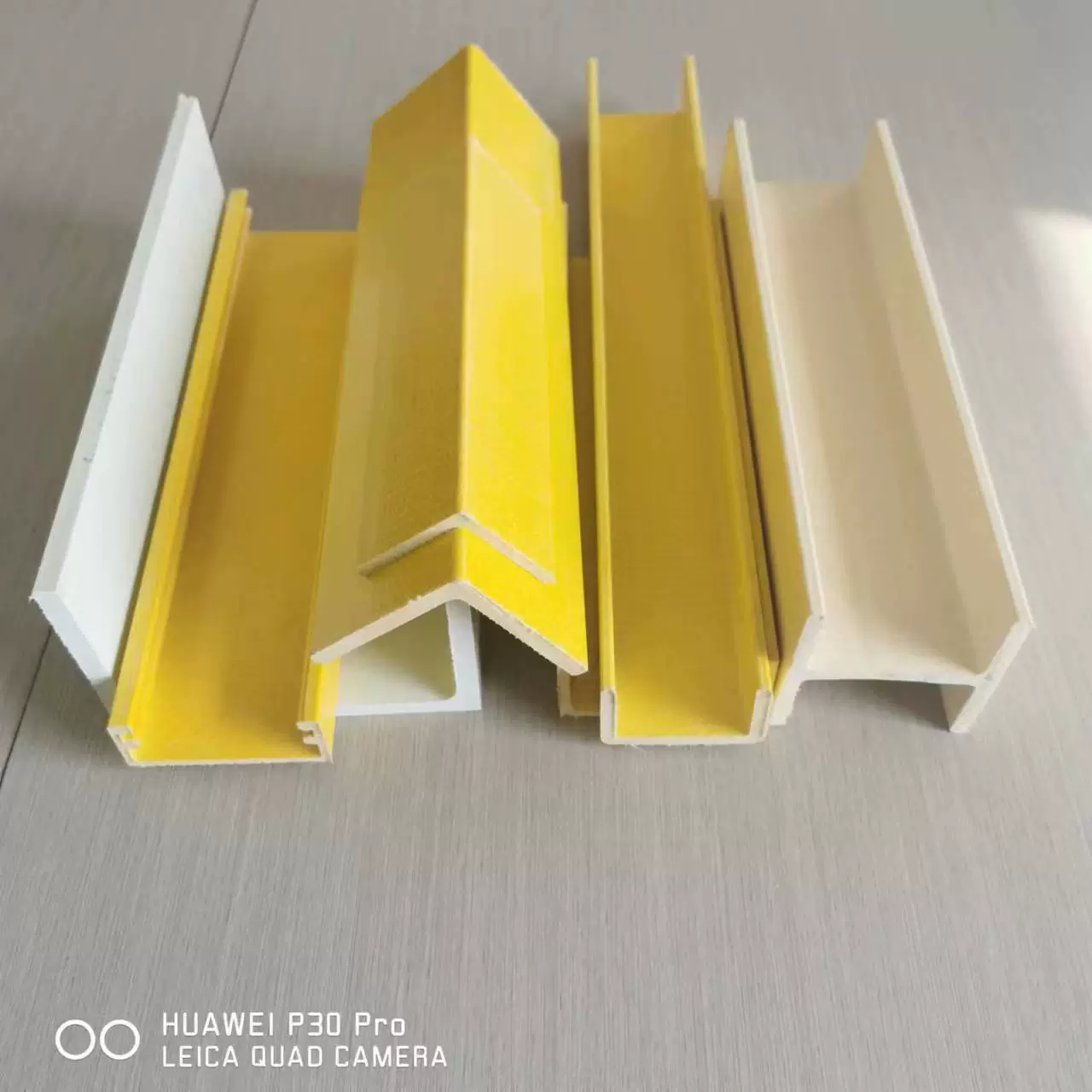
FRP, also known as fiberglass or GRP (Glass Reinforced Plastic), is a composite material made from a polymer matrix reinforced with glass fibers. The pultrusion process creates continuous lengths of FRP profiles with consistent cross-sections — including channels, angles, square tubes, I-beams, and custom shapes used in structural applications like solar panel mounting.
Key properties of FRP for structural use include:
- High strength-to-weight ratio: FRP offers tensile strength comparable to steel at a fraction of the weight
- Excellent corrosion resistance: Impervious to saltwater, chemicals, UV radiation, and atmospheric corrosion
- Electrical non-conductivity: Naturally dielectric, eliminating grounding concerns in electrical installations
- Low thermal conductivity: Minimizes heat transfer, reducing thermal expansion issues in mounting structures
- Design flexibility: Can be pultruded into virtually any cross-sectional profile needed for structural framing
In the context of solar energy, FRP excels in environments where traditional metals degrade rapidly. For instance, coastal solar farms benefit enormously from FRP/GRP structure mounting because the material does not suffer from salt spray corrosion that plagues aluminum over time.
Understanding Aluminum Alloys
Aluminum is a non-ferrous metal widely used in structural applications due to its favorable strength-to-weight ratio and natural corrosion resistance. In solar mounting structures, aluminum alloys — most commonly 6005-T5 and 6061-T6 — are the industry standard for racking systems, rails, and mounting brackets.
Key properties of aluminum for structural use include:
- Lightweight: At approximately 2.7 g/cm³, aluminum is about one-third the weight of steel
- Good strength: Heat-treated alloys like 6061-T6 offer yield strengths of 240 MPa or higher
- Natural oxide layer: Forms a protective aluminum oxide coating that resists corrosion in most environments
- High thermal conductivity: Dissipates heat efficiently, but also expands and contracts more with temperature changes
- Recyclability: Highly recyclable with no loss of mechanical properties, supporting sustainability goals
Despite its widespread use, aluminum has limitations in harsh environments. In coastal or industrial settings, aluminum is susceptible to pitting corrosion and galvanic corrosion when in contact with dissimilar metals. These weaknesses have driven growing interest in alternative materials like FRP for demanding structural applications.
FRP vs Aluminum Solar Mounting Structure: Key Advantages Compared
When evaluating FRP versus aluminum for solar mounting structures, engineers must weigh several critical factors that directly impact project performance and long-term economics. The FRP vs aluminum solar mounting structure comparison reveals compelling advantages that explain why the material is gaining traction across the solar energy industry.
| Advantage | FRP (Fiberglass) | Aluminum |
|---|---|---|
| Corrosion resistance | Excellent — impervious to salt, chemicals, and moisture | Good — but susceptible to pitting and galvanic corrosion |
| Weight (density) | 1.8–2.0 g/cm³ | 2.7 g/cm³ |
| Tensile strength | 200–400 MPa (orientation-dependent) | 240–310 MPa (alloy-dependent) |
| Thermal expansion | Very low (10–20 × 10⁻⁶ /°C) | Moderate (23 × 10⁻⁶ /°C) |
| Electrical conductivity | Non-conductive (dielectric) | Conductive — requires grounding |
| Service life in harsh environments | 25+ years with minimal maintenance | 15–20 years before corrosion may require replacement |
One of the most significant advantages of FRP over aluminum for solar mounting structures is its complete immunity to galvanic corrosion. When aluminum mounting structures contact steel fasteners or copper grounding wire, galvanic cells form that accelerate aluminum corrosion. FRP eliminates this risk entirely since it is electrically non-conductive and chemically inert.
The FRP/GRP structure mounting — ideal for mounting solar panels in aggressive environments, offers a turnkey solution for projects where traditional metals fail prematurely. Additionally, FRP does not suffer from UV degradation when properly formulated with UV inhibitors in the resin system. Modern FRP pultrusion formulations include UV-stabilized polyester or vinyl ester resins that maintain structural integrity for decades under direct sunlight — a critical requirement for solar panel mounting applications.
For projects considering which material to choose for solar mounting, the key advantages of FRP — including corrosion immunity, lighter weight, lower thermal expansion, and electrical non-conductivity — often outweigh the slightly higher initial material cost. This is particularly true for installations in coastal, industrial, or chemically aggressive environments where aluminum components require additional protective measures.
Weight Comparison: Which Is Lighter for Solar Structures?
Weight is a critical factor in solar mounting structure design because it affects roof loading, foundation requirements, transportation costs, and installation labor. Addressing the question which is lighter for solar structures: FRP or aluminum requires examining both material density and the structural weight needed to achieve equivalent load capacity.
Material density comparison:
- FRP (fiberglass composite): 1.8–2.0 g/cm³
- Aluminum (6000 series alloys): 2.7 g/cm³
- FRP is approximately 25–33% lighter than aluminum by volume
However, the comparison is not purely volumetric. When designing structural members for equivalent load-bearing capacity, FRP components may require slightly thicker cross-sections than aluminum to achieve similar stiffness because aluminum has a higher elastic modulus (69 GPa for aluminum vs approximately 20–30 GPa for FRP in the longitudinal direction). Despite this, FRP typically ends up lighter overall because its density advantage outweighs the modest thickness increase.
For solar panel mounting specifically, FRP offers a notable weight advantage that reduces roof dead loads and simplifies ground-mount foundation design. This is particularly valuable for rooftop solar installations where structural loading limits are a primary constraint. The lighter weight of FRP/GRP structure mounting also translates to lower shipping costs and easier on-site handling, reducing labor requirements during installation.
Strength and Durability: Is FRP More Durable Than Aluminum?
Answering the question is FRP more durable than aluminum for outdoor solar panel mounting requires examining multiple dimensions of durability including mechanical strength, fatigue resistance, and environmental stability.
Mechanical strength comparison:
FRP and aluminum exhibit different strength characteristics. FRP is orthotropic — its strength depends on fiber orientation — while aluminum is isotropic. In the longitudinal (fiber) direction, FRP pultruded profiles achieve tensile strengths of 200–400 MPa, comparable to 6061-T6 aluminum at 310 MPa. However, FRP maintains higher strength retention in corrosive environments where aluminum degrades.
Fatigue and cyclic loading:
Solar mounting structures experience cyclic loading from wind, thermal expansion, and occasional snow loads. Aluminum has a well-defined fatigue limit — typically 40–50% of its ultimate tensile strength. FRP exhibits excellent fatigue resistance, often retaining 60–70% of static strength after millions of cycles, because the glass fibers arrest crack propagation. This makes FRP particularly suitable for solar arrays in wind-prone regions.
Impact resistance:
Aluminum is ductile and deforms plastically under impact, which can be advantageous in absorbing sudden loads. FRP is more brittle but has higher specific energy absorption in certain configurations. For solar mounting applications where hail and debris impact are concerns, both materials perform adequately when properly designed, though aluminum may dent while FRP may crack under extreme impact.
Thermal performance:
FRP has a coefficient of thermal expansion (CTE) of 10–20 × 10⁻⁶ /°C — significantly lower than aluminum at 23 × 10⁻⁶ /°C. This means FRP mounting structures experience less dimensional change with temperature fluctuations, reducing stress on solar panel frames and mounting hardware. In desert installations where temperature swings exceed 50°C daily, FRP thermal stability is a meaningful advantage.
Corrosion Resistance: A Key Advantage of FRP
Corrosion resistance is arguably the most significant differentiator when comparing FRP to aluminum, particularly for installations in aggressive environments.
How aluminum corrodes:
Aluminum naturally forms a protective aluminum oxide (Al₂O₃) layer that provides good corrosion resistance in neutral pH environments. However, this oxide layer is amphoteric — it breaks down in both acidic and alkaline conditions. In coastal environments, chloride ions from salt spray penetrate the oxide layer, causing pitting corrosion. Aluminum is also highly susceptible to galvanic corrosion when in contact with more noble metals like stainless steel or copper — common materials in solar electrical systems.
How FRP resists corrosion:
FRP is inherently corrosion-resistant because the polymer resin matrix encapsulates the glass fibers, preventing any chemical attack on the structural reinforcement. Vinyl ester and polyester resins used in pultruded FRP profiles resist a wide range of chemicals, including:
- Saltwater and marine atmospheres
- Industrial pollutants and acid rain
- Soil chemicals in ground-mount applications
- UV radiation (with appropriate resin additives)
- Ammonia and agricultural chemicals near solar farms in rural areas
Real-world implications:
For coastal solar farms located within 5 km of the ocean, aluminum mounting structures typically require anodization or powder coating for protection, and even then may show pitting within 10 years. FRP profiles require no additional coating and maintain their structural integrity indefinitely in marine environments. This makes FRP/GRP structure mounting the preferred choice for offshore and coastal solar installations, wastewater treatment plant solar arrays, and industrial rooftop solar systems exposed to chemical fumes.
Cost Comparison: FRP vs Aluminum for Solar Mounting Systems
The question how does the cost of FRP compare to aluminum for solar mounting systems requires a total-cost-of-ownership (TCO) analysis rather than a simple material price comparison.
Upfront material costs:
| Cost Factor | FRP (Fiberglass) | Aluminum |
|---|---|---|
| Raw material cost per kg | $3–8 / kg | $4–6 / kg |
| Fabrication complexity | Moderate — pultrusion is efficient for long runs | Low — extrusion and bending are mature processes |
| Surface treatment required | None (UV-stabilized resin is integral) | Anodization or powder coating adds 10–25% |
| Fasteners and hardware | Standard stainless steel | Requires isolation kits to prevent galvanic corrosion |
Installation costs:
FRP lighter weight reduces installation labor and equipment requirements. FRP/GRP structure mounting components are easier to maneuver on rooftops and require less heavy lifting equipment for ground-mount installations. However, FRP requires drilling for field modifications, while aluminum can be cut with standard power saws — a marginal difference in most professional installations.
Maintenance and lifecycle costs:
- Aluminum: May require periodic inspection for corrosion, particularly at connection points. Coastal or industrial installations may need recoating or component replacement within 15 years.
- FRP: Essentially maintenance-free for the life of the installation. No painting, coating, or corrosion treatment required.
Long-term value:
While aluminum mounting systems typically have a lower initial purchase price (10–20% less than equivalent FRP systems), the total cost over a 25-year solar project lifespan often favors FRP when maintenance costs, replacement expenses, and downtime are factored in. In corrosive environments, FRP delivers a lower total cost of ownership because it eliminates the need for periodic replacement of corroded components.
Lifespan: FRP vs Aluminum Solar Mounting Structures
Project lifespan is a crucial consideration for solar installations, which typically have design lives of 25–30 years. The question what is the lifespan of FRP vs aluminum solar mounting structures directly impacts project economics and maintenance planning.
Aluminum lifespan in solar mounting:
- Standard environments (inland, non-industrial): 20–25 years with proper maintenance
- Coastal environments (<5 km from ocean): 10–15 years before visible pitting occurs
- Industrial environments (chemical exposure): 8–12 years typically
- With protective coating: Anodization or powder coating extends life by 5–10 years but coating degradation is inevitable
Aluminum does not rust like steel, but its corrosion mechanisms — pitting, crevice corrosion, and galvanic corrosion — progressively reduce load-bearing capacity over time. In structural mounting applications, this means safety factors diminish as the installation ages.
FRP lifespan in solar mounting:
- All environments: 25+ years with minimal degradation
- Coastal environments: 25+ years — no corrosion mechanism affects FRP
- Industrial environments: 25+ years with appropriate resin selection
- UV exposure: Properly formulated UV-resistant FRP shows <5% strength loss over 25 years
FRP structures have demonstrated 30+ year service lives in bridge decks, cooling tower components, and marine applications — environments far more aggressive than typical solar panel mounting. The key is proper resin selection: polyester resins for standard applications, vinyl ester for enhanced corrosion resistance, and UV-stabilized formulations for maximum outdoor longevity.
FRP/GRP structure mounting – ideal for mounting solar panels in harsh environments, consistently delivers 25+ years of maintenance-free service. This longevity advantage makes FRP the preferred choice for project owners seeking to maximize return on investment over the full solar asset lifecycle.
Bottom line: FRP consistently outlasts aluminum in solar mounting applications, particularly in challenging environments. When the solar panels themselves have a 25-year warranty, choosing FRP mounting structures ensures the support system matches or exceeds panel lifespan without requiring mid-life replacement.
FRP vs Aluminum in Specific Profiles
Beyond solar mounting structures, the FRP vs aluminum comparison extends to specific profile shapes used across construction and industrial applications. Understanding how each material performs in common structural profiles helps engineers make informed specification decisions for the entire project.
FRP Handrail vs Aluminum Handrail
The FRP handrail vs aluminum handrail comparison is important for safety systems in industrial plants, water treatment facilities, and public infrastructure where both materials compete. Understanding the FRP handrail vs aluminum handrail trade-offs helps specifiers choose the optimal material for each environment.
Aluminum handrails are lightweight, easy to fabricate, and offer a clean aesthetic. They are widely used in commercial buildings and outdoor spaces where appearance matters. However, aluminum handrails require protective coatings in corrosive environments and can suffer from galvanic corrosion at connection points where stainless steel fasteners are used.
FRP handrails excel in environments where corrosion resistance is paramount. Key advantages include:
- Non-conductive — eliminates electrical shock hazards in electrical substations and railway platforms
- Non-sparking — safe for use in flammable atmospheres
- Zero maintenance — no painting or coating required over the entire service life
- Impact resistance — FRP handrails absorb impact energy without permanent deformation
For applications in chemical plants, marinas, wastewater treatment, and offshore platforms, FRP handrails are increasingly specified over aluminum due to their superior long-term performance. When comparing FRP handrail vs aluminum handrail in corrosive environments, FRP consistently outlasts aluminum by a significant margin, making it the cost-effective choice for the full project lifecycle.
FRP Channel vs Aluminum Channel
The FRP channel vs aluminum channel comparison is particularly relevant for structural framing, cable tray supports, and equipment mounting in industrial and commercial settings. Understanding FRP channel vs aluminum channel differences helps engineers select the appropriate profile for each application.
Aluminum channels (C-channels, U-channels) offer excellent formability and can be bent, punched, and welded easily. They are the standard choice for many structural framing applications where corrosion conditions are mild. Aluminum channels are available in a wide range of standard sizes and thicknesses, making them easy to source and specify.
FRP channels offer distinct advantages that make them the superior choice in demanding environments:
- Pultruded FRP channels maintain consistent cross-sectional dimensions and mechanical properties throughout the length
- Available in standard sizes that match aluminum channel dimensions, enabling direct substitution in many applications
- No galvanic corrosion concerns when in contact with metal fasteners or adjacent metal structures
- Non-conductive — eliminates grounding requirements in electrical support applications
- Excellent performance in cable tray support systems where exposure to moisture and chemicals is expected
In solar mounting applications specifically, FRP channels serve as excellent purlins and cross-members for panel attachment. Their corrosion resistance ensures that the structural integrity of the mounting system does not degrade over the project lifetime. For projects debating FRP channel vs aluminum channel, the FRP option delivers superior long-term value in corrosive environments and requires less maintenance over the service life.
FRP Square Tube vs Aluminum Square Tube
Square tubes are fundamental building blocks in structural framing, handrail systems, and equipment supports. The FRP square tube vs aluminum square tube comparison highlights how material selection impacts structural design. Understanding the FRP square tube vs aluminum square tube trade-offs is essential for engineers designing lightweight, corrosion-resistant structural systems.
Aluminum square tubes benefit from established manufacturing processes, wide availability, and predictable mechanical properties. They are extensively used in solar racking structures, where their combination of strength and moderate weight has made them the industry default. Aluminum square tubes can be welded, though welding reduces strength in the heat-affected zone and requires post-weld heat treatment for optimal performance.
FRP square tubes are manufactured through the pultrusion process, producing continuous lengths with precise dimensional tolerances and consistent fiber reinforcement. Key advantages include:
- Higher strength-to-weight ratio: FRP square tubes deliver comparable structural capacity at lower weight than equivalent aluminum tubes
- Corrosion-free performance: No degradation in marine, chemical, or humid environments
- Thermal stability: Minimal expansion and contraction with temperature changes, maintaining joint integrity
- Fatigue resistance: Superior performance under cyclic wind loading for solar tracking structures
For solar tracker systems that rotate panels throughout the day, the combination of lightweight, corrosion resistance, and fatigue endurance makes FRP square tubes an excellent alternative to aluminum. When evaluating FRP square tube vs aluminum square tube for structural framing, the FRP option provides superior long-term performance in demanding environments and eliminates concerns about galvanic corrosion at connection points.
Can FRP Replace Aluminum in Solar Panel Mounting?
The question can FRP replace aluminum in solar panel mounting applications is increasingly relevant as solar energy projects expand into challenging environments and seek longer service lives with lower maintenance.
Where FRP can directly replace aluminum:
- Coastal solar farms: FRP is superior to aluminum in marine environments where salt spray causes rapid aluminum degradation
- Rooftop solar installations: FRP lighter weight and non-corrosive properties make it ideal for commercial and industrial rooftops
- Wastewater and water treatment solar arrays: FRP resistance to chemicals and moisture is unmatched
- Agrivoltaic installations: FRP withstands agricultural chemicals, fertilizers, and moisture better than aluminum
- Solar carports and canopies: FRP structural profiles handle exposure while requiring no maintenance
Where aluminum remains preferred:
- Standard ground-mount arrays in benign environments: Aluminum established supply chains and lower upfront costs make it competitive
- Applications requiring welding: Aluminum can be welded; FRP requires mechanical connections (bolting, adhesives)
- Highly loaded structural members: Aluminum higher elastic modulus provides greater stiffness per cross-sectional area
- Projects with extremely tight budgets: Aluminum lower initial material cost may be decisive when TCO analysis is not considered
For project owners seeking FRP/GRP structure mounting – ideal for mounting solar panels in coastal, industrial, or agricultural environments, FRP offers a proven alternative to traditional aluminum racking systems. The growing body of real-world installations demonstrates that FRP structures perform reliably across diverse climate conditions.
The verdict: FRP can indeed replace aluminum in the majority of solar mounting applications, particularly those where environmental exposure, lifespan, or maintenance costs are concerns. The trend in the solar industry is toward increased FRP adoption as project owners recognize the total-cost-of-ownership benefits. For new installations in corrosive or coastal environments, FRP is rapidly becoming the preferred choice over aluminum.
However, FRP is not a universal replacement. Each project requires careful evaluation of loading conditions, environmental exposure, budget constraints, and code compliance. In many cases, hybrid approaches using FRP for structural members exposed to corrosion and aluminum for non-critical components offer the optimal balance of performance and cost.
Conclusion
The FRP vs aluminum solar mounting structure decision ultimately depends on project-specific requirements, but the evidence clearly favors FRP for challenging environments and long-term value.
Summary of key findings:
| Factor | Winner | Why |
|---|---|---|
| Weight | FRP | 25–33% lighter than aluminum by volume, reducing installation and shipping costs |
| Strength | Comparable | Both materials offer adequate strength; FRP excels in fatigue resistance |
| Corrosion resistance | FRP | Complete immunity to galvanic and chemical corrosion |
| Upfront cost | Aluminum | 10–20% lower initial material cost |
| Total cost of ownership | FRP | Zero maintenance and longer lifespan deliver superior long-term value |
| Lifespan | FRP | 25+ years in all environments vs 10–20 years for aluminum in harsh conditions |
| Thermal stability | FRP | Lower thermal expansion reduces stress on panels and hardware |
As solar energy deployment accelerates globally, material selection for mounting structures demands careful consideration of the full project lifecycle. While aluminum has served as the industry standard for years, FRP/GRP structure mounting offers compelling advantages — particularly for coastal, industrial, and harsh-environment installations where corrosion resistance and longevity are paramount.
Whether you are specifying materials for a 100 MW utility-scale solar farm, a rooftop commercial installation, or an industrial solar array, understanding the trade-offs between FRP and aluminum ensures you select the right material for your specific structural requirements. For most applications, FRP delivers superior lifetime performance at a competitive total cost.